Winnipeg-based AI help
Practical AI coaching from someone building with it every day.
I help Winnipeg professionals and curious builders learn AI by working through real tasks together: writing, research, planning, workflow cleanup, and AI-assisted building.
The main offer is the AI Fluency Sprint: five guided 1:1 sessions, intake, homework, resources, and a personal AI playbook. The proof behind it is simple: I use these tools to ship real public projects.
Start where you are
Beginner questions are completely fine.
Use real examples
Emails, documents, research, planning, or ideas.
Keep it clear
Plain language and simple explanations.
Proof of work
Coaching backed by live projects, not theory.
The work spans public directories, daily AI monitors, open-data tools, and Manitoba-specific analysis.
View all projects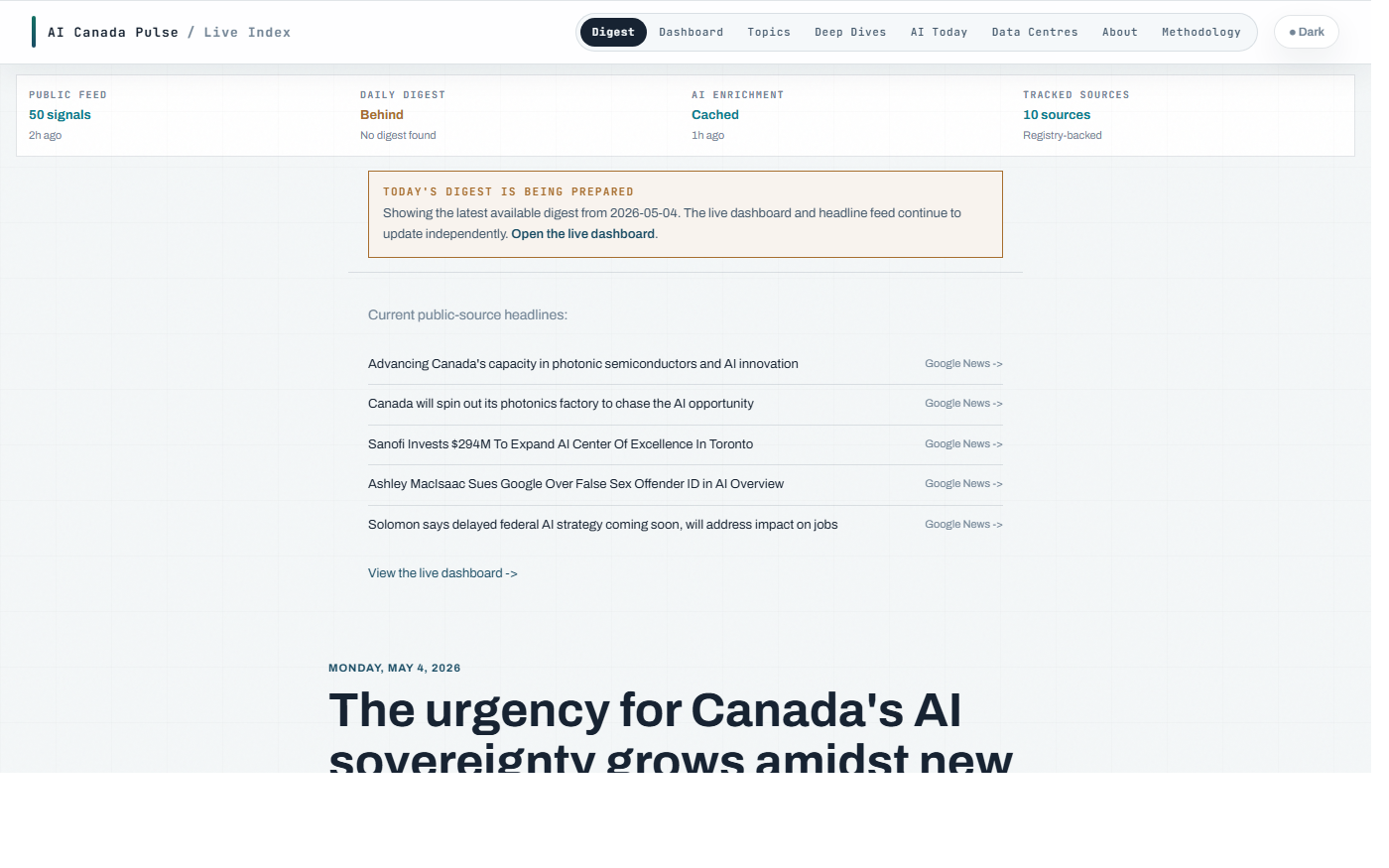
Public project
ai-canada-pulse.vercel.app
Live monitor
AI Canada Pulse
Collects Canadian AI stories into a more scannable daily intelligence desk.
See proof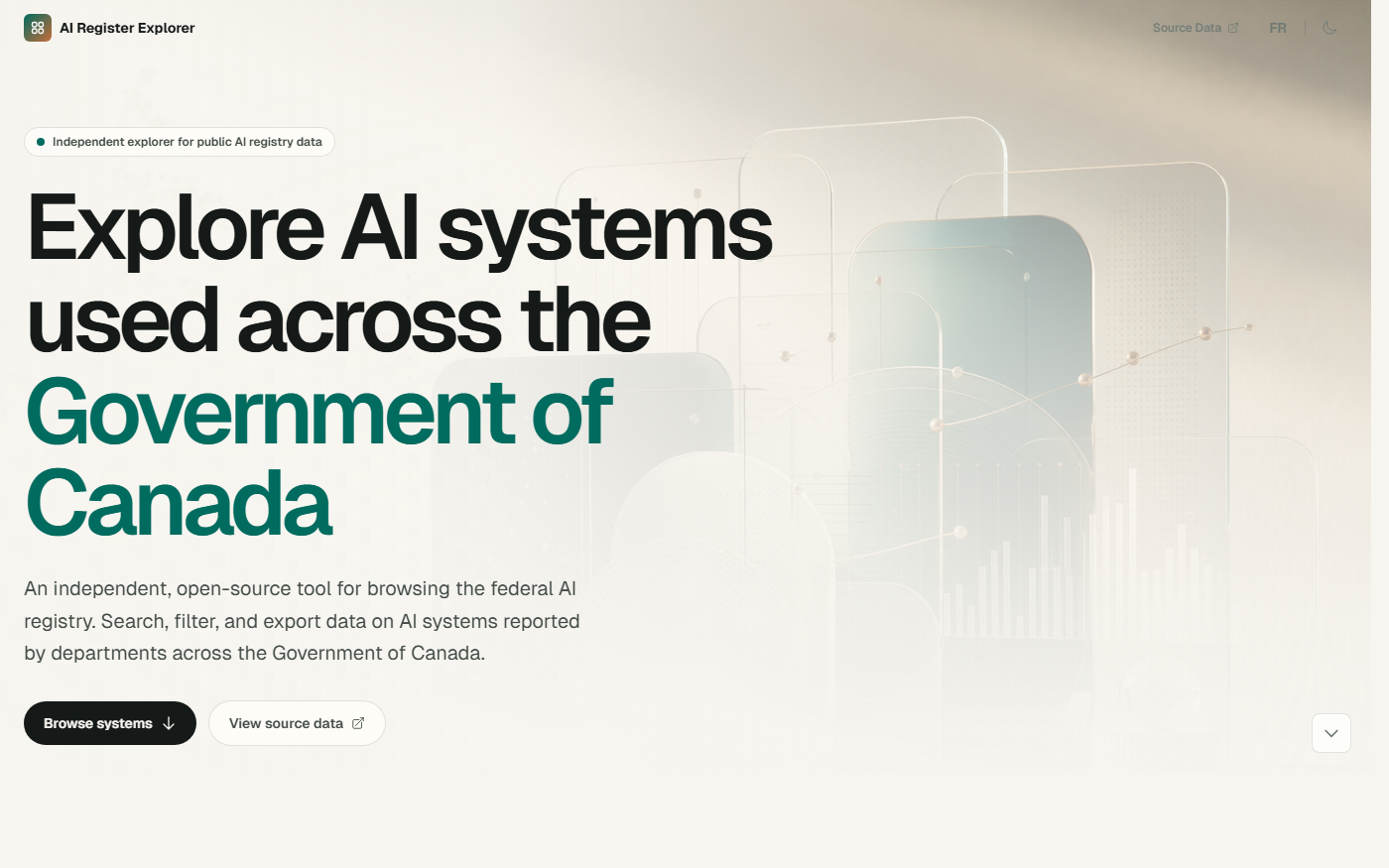
Public project
ai-register-explorer.vercel.app
Live open-data tool
AI Register Explorer
Makes federal AI registry data searchable enough for non-specialists to explore.
See proof
Public project
mb-ai-disruption.vercel.app
Live explorer
Manitoba AI Disruption Explorer
Turns labour-market datasets into a local way to think about AI exposure by industry.
See proofWhat I offer
Individual help, built around your actual work.
The fastest way to learn AI is to use it on something you already need to do.
1:1 AI coaching
For people who want patient help getting comfortable with Claude, ChatGPT, Copilot, Gemini, or similar tools.
Learn moreWorkflow tune-up
Bring an email, document, research task, planning problem, or messy process and we will improve it together.
Learn moreAI Fluency Sprint
A five-session plain-language program with portal, homework, resources, and a personal AI playbook.
Learn moreWhat we can cover
Pick a starting point.
A session does not need to be complicated. Choose the thing that sounds closest to where you are.
Session focus
Start with the basics, without feeling behind.
We can open the tools together, compare what they do, and practice with simple examples until the interface and habits start to feel familiar.
What we might practice
Working idea
AI fluency comes from reps, not webinars.
I am exploring the idea of AI sandboxes as a better way to learn, but my current offer is strictly one-on-one coaching. The same principle applies: start with real work, practise carefully, and build judgement over time.
Read the AI sandbox ideaReal work
Practice on the emails, documents, notes, and workflows people already handle.
Safety first
Know what should and should not go into an AI tool.
Personal rhythm
Use short repeated practice so AI becomes useful, not overwhelming.
Example
A first session can be very simple.
We can start with one thing you already need to do: draft a message, understand a document, plan a project, compare tools, or try a coding agent. You do not need to arrive with perfect questions.
How a session works
What a session can look like.
Start with what you want to learn or get done.
Use one or two AI tools together while I explain what I am doing.
Practice until the steps make sense, not just until we get one good answer.
Leave with a few simple ways to keep using AI on your own.
Manitoba AI
Local context matters.
I keep notes on AI news, events, training, and adoption in Manitoba because local context matters. This is a learning resource, not a claim to have every answer.
Explore Manitoba AIWant patient help learning AI?
Bring a task, a question, or a tool you want to understand. We will work through it together.
Ask about 1:1 coaching